Repiping Your Home: Signs, Costs & What to Expect
When your pipes groan, rattle, or leak, it's not just background noise—it's your home asking for help. Water stains on the ceiling, rusty tap water, or a sudden drop in pressure can turn from minor annoyances to major headaches overnight.
At Exe Plumbing, we know a plumbing emergency can disrupt your life in a heartbeat. Repiping isn't just another upgrade—it's the backbone of your home's safety and comfort. Here’s what you need to know if you’re considering this important step.
When Does a Home Need Repiping? 🚰
Some pipes age gracefully. Others, not so much. Here’s how to spot when your home might be ready for a full repipe:
- Age of Pipes: Most galvanized steel or polybutylene pipes installed before the 1980s are living on borrowed time. Copper and PEX last longer but aren't immune to issues.
- Pipe Material: Each material has its quirks. Galvanized pipes rust from the inside out. Polybutylene can crack. Even copper can pit and corrode, especially if the local water has high acidity.
- Recurring Problems: If you’re calling for leak repair more than once a year, or facing frequent water pressure issues, it’s a red flag.
- Visible Corrosion or Leaks: Rust, green stains, or wet spots under sinks and behind walls aren't just cosmetic—they signal hidden trouble.
- Discolored Water: Brown, red, or yellow water points to rusted pipes. This isn’t just unpleasant; it can damage laundry and fixtures.
- Strange Noises: Banging, rattling, or whistling pipes are more than just annoying. They can be a sign of loose or failing pipes inside the walls.
If these warning signs are cropping up, it may be time to look beyond quick fixes. Emergency plumbing calls can add up, costing you more in the long run.
Repiping Process Overview
Repiping sounds daunting, but with the right team, it’s manageable. Here’s what to expect from start to finish:
Step 1: Inspection & Planning
A thorough inspection comes first. Using leak detection methods and sometimes small wall openings, plumbers assess which pipes need replacing and what materials are best for your area’s water quality.
Step 2: Choosing Materials
Most homeowners today choose between:
- Copper: Durable and time-tested, but pricier and sensitive to certain water chemistries.
- PEX (cross-linked polyethylene): Flexible, less expensive, and resistant to scale and chlorine. A top pick for modern homes.
- CPVC: A budget-friendly, rigid plastic option.
Step 3: Prep and Protection
Before work begins, your home gets prepped—furniture covered, floors protected. Water is shut off in sections to limit disruption.
Step 4: Pipe Replacement
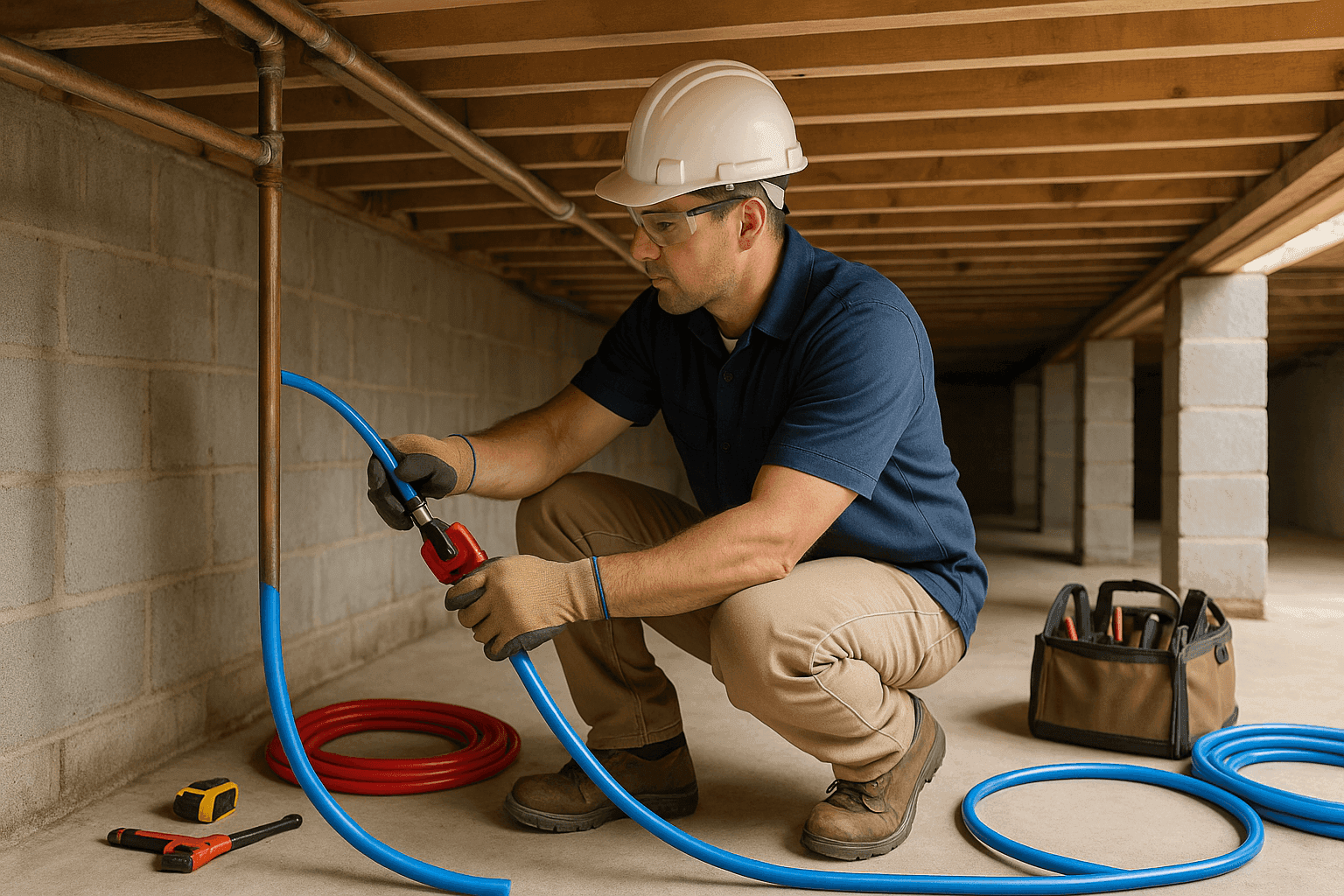
Old pipes are removed, and new ones are routed through walls, ceilings, and crawl spaces. Skilled plumbers minimize wall openings, but some patching and painting will be needed after.
Step 5: Testing & Clean-Up
Once installed, the new system is pressure-tested for leaks. Fixtures are reconnected, and the site is cleaned up—leaving your home better than before.
Timeline: Most homes take 2–7 days, depending on size and complexity.
Cost Factors: What Goes Into the Price Tag 💧
Repiping isn’t a one-size-fits-all job. Here’s what shapes the cost:
- Type of Pipe: Copper is the gold standard but costs more. PEX and CPVC are affordable, durable choices.
- Home Size: Bigger homes mean more pipe to replace. Multi-story homes can add complexity.
- Scope of Work: Full repipes (all hot and cold lines) are pricier than partial jobs. Replacing pipes in finished basements or behind tile increases labor.
- Accessibility: Tight crawl spaces, thick walls, and tricky layouts mean extra time and effort.
- Local Codes: Your city or county may require permits or code-specific upgrades, affecting the final bill.
- Water Quality: Hard or acidic water may require specific materials, sometimes with added filtration systems.
Ballpark range: Repiping a small home might cost as much as a used car; a large, older home more like a down payment on one. For precise estimates, call a reputable contractor for an in-person assessment.
Choosing the Right Contractor
Repiping is not the job for a neighbor’s handyman. Here’s how to pick a pro who’ll do it right:
- Licensing & Insurance: Always ask to see valid credentials and proof of insurance. This protects you and your property.
- Experience with Local Materials: Your region may favor copper, PEX, or CPVC depending on water quality and climate. Choose a plumber who knows what works best for your area.
- References & Reviews: Ask for recent customer references. Read online reviews for consistent feedback.
- Transparent Pricing: Get a written estimate that spells out labor, materials, permits, and any possible extras.
- Communication: A good contractor explains the process, answers your questions, and keeps you informed every step of the way.
Exe Plumbing is fully licensed and insured, with references available upon request. We believe in transparent, upfront pricing—no surprises.
Local and Seasonal Considerations 🏡
Here’s something many homeowners overlook: your region’s water and weather matter. In areas with hard water, pipes scale up faster, leading to more frequent replacements. If your town uses chlorinated water, certain plastics hold up better. Cold climates? Insulation is critical to prevent winter pipe bursts.
Building codes vary, too. Always hire a plumber who understands local codes and permit processes. The International Plumbing Code (IPC) and Uniform Plumbing Code (UPC) set national standards, but your city might have stricter rules.
FAQ: Your Repiping Questions Answered
Q: Do I have to leave my home during repiping?
A: In most cases, you can stay home. Water will be off for a few hours each day, but good plumbers keep disruption to a minimum.
Q: How long will new pipes last?
A: PEX and copper systems can last 40–70 years or more, depending on water quality and use.
Q: Is it possible to repipe only part of my home?
A: Absolutely. Partial repipes are common for additions or when only certain sections are failing.
Q: Will my insurance cover repiping?
A: Most policies don’t cover repiping due to age, but sudden damage from burst pipes is often included. Always check with your insurer.
Practical Tips for Homeowners
- Keep records: Save all invoices, permits, and warranties for future reference.
- Know your shut-offs: Learn where your main water valve is. In an emergency, this can save thousands in damage.
- Preventative maintenance: Schedule regular inspections—especially if you notice water pressure issues or slow drains.
- Ask about water filtration: If your pipes failed due to water quality, consider upgrading to a whole-home filtration system.
What To Expect From the Repiping Process
You’ll hear some noise. There’ll be dust, and a few holes in the wall. But a skilled team moves fast, keeps mess to a minimum, and cleans up after themselves. When it’s done, your water runs clear, pressure is strong, and the peace of mind is real.
The Bottom Line
Repiping is a big step, but sometimes it’s the only way to protect your family, your investment, and your peace of mind. If signs are pointing to failing pipes, don’t wait for a true emergency.
Call Exe Plumbing now — or reach us anytime at 877-775-9948 .