Pipe Repair vs. Pipe Replacement: What’s Best for Your Home?
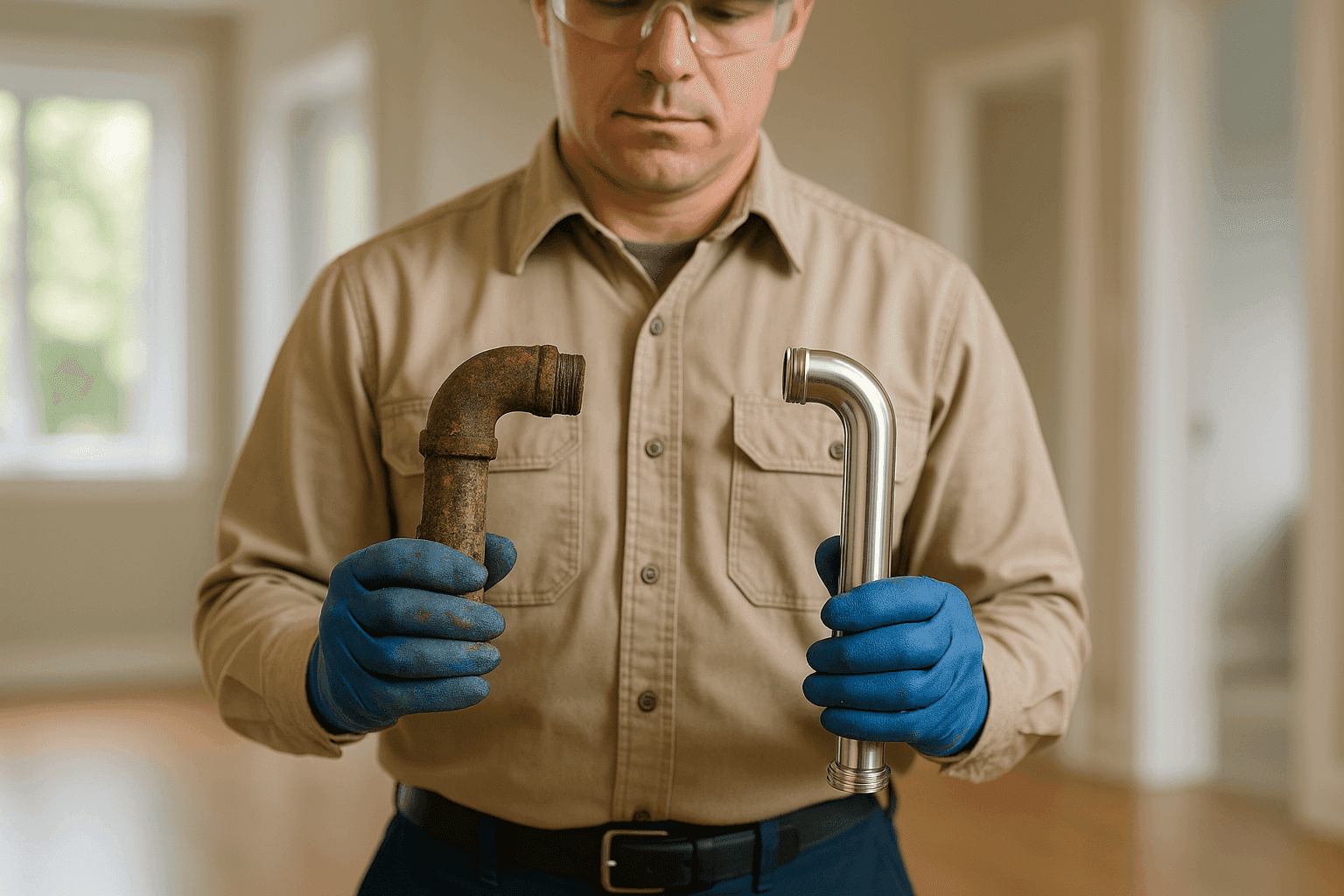
Have you noticed a damp patch on the ceiling? Maybe you’ve heard the sound of water running behind the walls, but can’t find the source. Or you’re ankle-deep in water after a pipe bursts at midnight. Plumbing problems have a way of showing up when you least expect them—and they don’t wait for business hours.
At Exe Plumbing, we know how unsettling it is when your home’s pipes let you down. We’ve seen every kind of pipe issue across countless homes. The big question most homeowners ask: Should I repair this pipe, or is it time to replace it completely? Let’s break it down together.
Common Pipe Problems – Leaks, Corrosion, and Bursts 🛠️
Pipes are the veins of your home. They quietly do their job—until something goes wrong. Here are the most common issues homeowners face:
- Leaks: The most obvious (and annoying) sign. Sometimes it’s a slow drip under the sink. Other times, it’s a steady stream.
- Corrosion: Older pipes (especially galvanized steel or iron) can rust from the inside out. This leads to brown water, reduced flow, or even pinhole leaks.
- Bursts: When a pipe cracks open, water rushes out fast. Freezing weather, old age, or sudden pressure changes can cause this.
- Clogs and blockages: Buildup from hard water, grease, or debris can slow things down—or stop them entirely.
- Strange noises: Pipes that bang, whistle, or gurgle may be trying to tell you something’s wrong.
If any of these sound familiar, you’re not alone. These problems happen in homes old and new, and knowing the root cause is the first step to a fix.
When to Repair – Temporary and Permanent Fixes
Not every pipe problem means tearing out walls or floors. Sometimes a quick repair is all you need.
When is repair the best choice?
- Isolated leaks: A single leak in a newer pipe can often be patched or sealed.
- Minor corrosion spots: If the damage is small and hasn’t spread, a repair may hold up.
- Newer materials: PVC, PEX, and copper pipes respond well to targeted repairs.
- Low water pressure: Sometimes, cleaning out a clog or replacing a fitting is all it takes.
- Emergencies: A temporary fix (like a pipe clamp or epoxy patch) can stop flooding until proper repairs are made.
Think of repair like patching a tire. It’ll get you rolling again, but if the tread’s worn out everywhere, it’s only a matter of time before you’re back at the shop.
Permanent repairs are best when the issue is contained and the rest of the system is in good shape. In these cases, repairs can last for years with no trouble.
When to Replace – Age, Material, and Water Quality
Sometimes, a repair is just a bandage on a bigger problem. Here’s when pipe replacement becomes the smarter move:
- Old pipes: Pipes over 50 years old (especially galvanized steel or cast iron) are living on borrowed time.
- Repeated leaks: If you’re calling for leak repair every few months, replacement saves money and stress.
- Bad water quality: Rusty or discolored water, odd tastes, or flakes in your tap can signal pipe decay.
- Widespread corrosion: If several sections of pipe are failing at once, patching won’t cut it.
- Unsafe materials: Some older homes still have lead pipes or joints. These must be replaced for health and safety.
- Major remodels: If you’re opening up walls for kitchen plumbing or bathroom upgrades, it’s smart to update the pipes too.
Think of replacement like swapping a frayed garden hose. Sure, you could tape it up, but you’ll sleep better knowing it’s brand new.
Cost Comparison – Short-Term vs. Long-Term
Money matters. We get it. Here’s what to consider when weighing repair and replacement:
Repair: The Short-Term Saver
- Lower upfront cost: Fixing a single leak or replacing a section is usually cheaper right now.
- Less disruption: Repairs are often faster, with minimal wall or floor removal.
- Works well for newer systems: Especially if the rest of your plumbing is sound.
Replacement: The Long-Term Investment
- Higher initial cost: Swapping out old pipes is a bigger project.
- Saves future repairs: New pipes mean fewer emergencies and repairs down the road.
- Improves home value: Updated plumbing is a major plus for resale.
- Better water quality and pressure: New pipes bring peace of mind and healthier water.
The real cost isn’t just in dollars—it’s in time, convenience, and peace of mind. Sometimes, spending a little more now saves a lot later.
Honest Advice and Real-World Examples
At Exe Plumbing, we believe in straight talk. Here’s how we help homeowners make the right choice:
- Assessment first: We inspect, test, and explain what’s happening—using tools like leak detectors, thermal cameras, and pressure gauges.
- Show and tell: Whenever possible, we show you the damaged pipe sections before and after.
- Warranties: We stand by our work. Repairs and replacements are done to the highest standards, per local code.
- Case study: One homeowner called us for recurring leaks under the kitchen sink. After three repairs in a year, we replaced the whole line. They haven’t had a problem since—and the water pressure improved, too.
Local Nuance – Pipe Types by Region and Climate 🌡️
Where you live shapes your plumbing. In colder climates, pipes are prone to freezing and bursting. In older neighborhoods, you’ll find more cast iron or galvanized steel—both of which wear out faster. In newer developments, PVC and PEX are common and easier to repair.
- Hard water regions: Mineral buildup can clog pipes faster (especially in southern and western states).
- Coastal homes: Salty air speeds up metal pipe corrosion.
- Areas with clay soil: Shifting ground can crack buried pipes, leading to emergency plumbing calls.
It pays to know your home’s history and what’s running behind your walls.
Practical Tips: What Homeowners Can Do
- Watch for warning signs: Stains, drips, low pressure, or odd water taste? Have it checked.
- Insulate pipes in winter: Prevents freezing and bursts.
- Don’t ignore small leaks: They rarely fix themselves.
- Know your shutoff valve: In an emergency, turning off the water can save thousands in damage.
- Schedule routine inspections: Even a quick check-up can catch issues early.
For more on plumbing codes and pipe lifespan, check resources like the International Association of Plumbing and Mechanical Officials (IAPMO) or your local building department.
Quick Safety Checklist Before You Decide
- Turn off your main water supply before trying any DIY repairs.
- Avoid using electrical appliances near leaks or floods.
- Never attempt gas line or water heater repairs yourself—call a licensed plumber.
- If you smell gas or see sparks, evacuate and contact emergency services.
DIY vs. Call a Pro
Some leaks can be stopped temporarily with plumber’s tape or a clamp. But if you’re dealing with:
- Multiple leaks
- Burst pipes
- Gas lines
- Sewer smells
- Water heater problems
…it’s time to call an emergency plumbing professional. Pipe issues often hide deeper problems—fixing the surface won’t solve the root.
What Pros Do On Arrival
When Exe Plumbing shows up, here’s what you can expect:
- Assessment: We inspect, listen, and use tools to find the source.
- Containment: We stop the leak or shut off water to prevent more damage.
- Diagnosis: We explain the issue in plain language and show you the problem.
- Action plan: We lay out repair and replacement options—no pressure, just facts.
- Aftercare: Once fixed, we test and make sure everything’s safe and up to code.
Prevention & Maintenance
A little care goes a long way. Consider:
- Annual plumbing check-ups
- Water pressure checks (excess pressure can strain pipes)
- Upgrading old fixtures and hoses
- Installing water filtration systems to reduce mineral buildup
- Backflow testing to protect your drinking water
Costs & Time Factors
- Small repairs: Often take 1–3 hours, depending on access and pipe type.
- Major replacements: Can span a day or more, especially if walls or floors need opening.
- Material matters: Copper and PEX are faster to work with than old iron or steel.
- Emergency plumbing: After-hours work might cost more, but stopping a flood is always worth it.
When It’s an Emergency 🚨
- Water spraying from a burst pipe? Shut off your water and call right away.
- Flooding near electrical outlets or your main panel? Stay safe—don’t enter the area.
- Gas line break or rotten egg smell? Get out and call emergency services.
Exe Plumbing responds fast. We know every minute counts.
FAQ
How do I know if my pipes are too old to repair?
If your pipes are older than 50 years, or you’re dealing with frequent leaks, it’s time to consider replacement. Discolored water and low pressure are also warning signs.
Can I patch a pipe myself?
Temporary fixes like clamps or tape can stop a leak in a pinch, but they’re not a long-term solution. Permanent repairs need the right tools and skills.
Will insurance cover pipe repair or replacement?
It depends on your policy and the cause of the damage. Sudden breaks are often covered; gradual leaks or old age may not be. Check with your provider.
How do I prevent future pipe problems?
Regular inspections, keeping pipes insulated, and updating old plumbing when renovating can all help. Address small issues before they become big ones.
Local/Seasonal Considerations
Homes in colder regions should always insulate exposed pipes. In older neighborhoods, get a plumbing inspection before buying or remodeling. If your area has hard water, consider a filtration system—this protects pipes and appliances.
When pipes act up, you don’t have to face it alone. At Exe Plumbing, we’re here for every drip, leak, or burst—day or night. Whether you need fast emergency plumbing, sump pump repair near you, or just honest advice, let’s keep your home flowing safely.
Call Exe Plumbing now — or reach us anytime at 877-775-9948 .