Emergency Plumbing Guide: What to Do Before Help Arrives
When a pipe bursts or your basement starts to flood, panic is natural. Water moves fast—so do nerves. In those frantic moments, knowing what to do can save your home and your peace of mind.
At Exe Plumbing, we’ve seen midnight leaks, gas scares, and storm-fueled floods. Our licensed team is on call 24/7, ready for the worst so you don’t have to be. But before help arrives, there are steps you can take to keep your family safe and minimize damage.
Types of Plumbing Emergencies 🚨
Not all plumbing problems demand a red siren. But some do. Here’s what can’t wait:
- Burst Pipes
Water gushing like a fire hydrant? That’s time-sensitive. Pipes can split from freezing or old age. The damage spreads fast. - Flooding
Sump pump failed? Heavy rain? Water in your basement threatens your home’s foundation and your possessions. - Gas Leaks
Smell rotten eggs or hear a hissing near gas appliances? Get out. Natural gas is invisible, odor is added for a reason. It’s dangerous. - Major Clogs
A single blocked toilet is a hassle. Multiple drains backing up? Sewage in the tub? That’s an emergency. - Sewer Backups
Raw sewage is a health risk. If you see or smell it, call immediately.
Other urgent situations include water heater leaks, sudden loss of water pressure, or any plumbing problem during freezing weather.
Safety First – Quick Checklist
Safety isn’t just a buzzword—it’s your lifeline. Here’s what to do first:
- Shut Off the Water
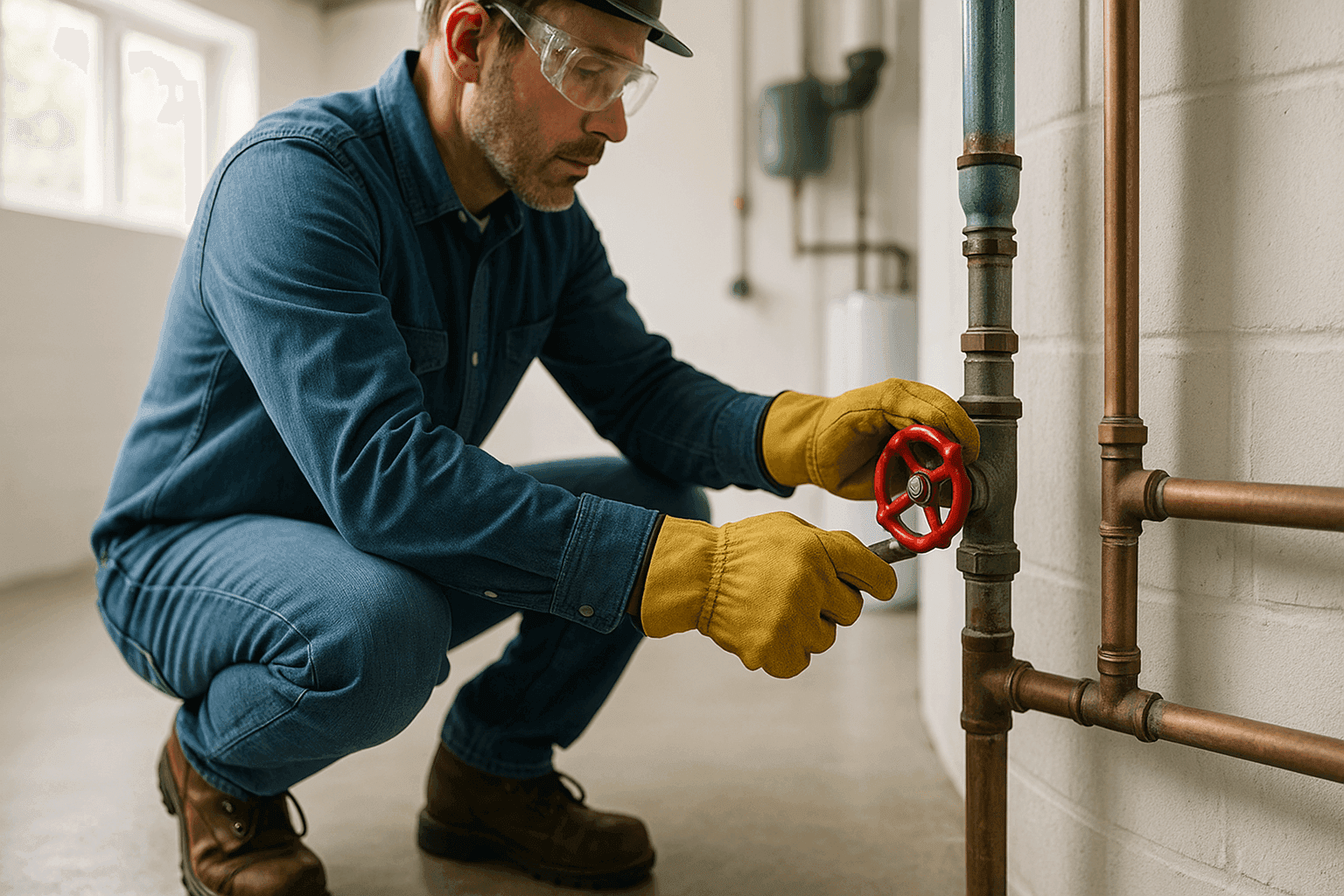
Find your main water shutoff valve. It’s usually near the water meter or where the main line enters your home. Turn clockwise to close.
Tip: If you don’t know where it is, find it now—don’t wait for disaster. - For Gas Leaks: Evacuate Immediately
Don’t use light switches, phones, or electrical devices. Get everyone outside and call your gas company from a safe location. - Kill the Electricity (if safe)
If water is pooling near outlets or appliances, shut off power at the breaker box—only if you can reach it without stepping in water. - Ventilate
Open windows if you smell gas or chemicals. - Clear the Area
Keep kids and pets away from the mess. - Wear Shoes and Gloves
Protect yourself from sharp debris and contaminants.
For more on home safety, see guidance from the National Fire Protection Association and local building codes.
Mitigating Damage – What You Can Do
When the unexpected hits, a few actions can make all the difference:
- Contain Leaks
Use towels, buckets, or pots to collect dripping water. Place them under leaks or at pipe joints. - Move Valuables
Get electronics, furniture, and keepsakes out of the affected area. Water creeps in silently and quickly. - Unclog Drains (Carefully)
If only one drain is blocked, try a plunger. Avoid chemical cleaners—they can make things worse and harm pipes. - Turn Off Appliances
Water heater leaking? Shut off the power or gas supply to the unit. Follow the manufacturer’s instructions for your model. - Monitor the Situation
Watch for new leaks, cracks, or water spreading to other rooms. - Document the Damage
Take photos for insurance. It’s the last thing on your mind—but you’ll thank yourself later.
Remember: Sump Pump Repair near you is only a call away, but these steps buy you precious time.
When to Call a Professional
Some problems are DIY-friendly—a slow drip, a minor clog. But others are wolves in sheep’s clothing. Here’s when to call Exe Plumbing:
- Water won’t stop flowing, even after shutting off local valves
- Gas smell or hissing sounds
- Multiple drains backing up simultaneously
- No water supply throughout the house
- Water heater making loud banging or leaking rapidly
- Raw sewage backing up into any drain
- Flooding near electrical panels
If you’re unsure, err on the side of caution. A licensed plumber is trained to handle hazards you might not see.
What the Pros Do On Arrival
When our team arrives, they move quickly. Here’s what you can expect:
- Assessment
We start with a visual inspection, looking for obvious leaks, water stains, or gas leaks. - Testing and Detection
Using specialized equipment (like moisture meters and gas detectors), we find the root cause—hidden leaks, failing sump pumps, or compromised pipes. - Immediate Repairs
Stop the leak, cap the pipe, or isolate the affected area. For gas, we follow state and local safety codes. - Cleanup and Advice
We’ll help you understand what happened, what to watch for, and how to prevent it next time.
Our plumbers are fully licensed and bonded, so you can trust the work is up to code.
Prevention & Maintenance
Plumbing systems are like cars—they work best with regular attention. Here’s how to reduce your risk:
- Know Your Shutoffs
Label all shutoff valves. Practice turning them off. - Regular Inspections
Schedule annual checks for leaks, gas lines, and water heaters. - Install Water Alarms
These small devices alert you to leaks before they turn disastrous. - Protect Pipes in Winter
Insulate exposed pipes and let faucets drip during deep freezes. - Test Sump Pumps
Pour a bucket of water into the sump pit to see if the pump turns on. - Backflow Testing
Prevent contaminated water from reversing into your home’s supply. - Upgrade Old Fixtures
Consider replacing outdated pipes, valves, and appliances to avoid surprise failures.
For more details, check with your local plumbing code (often based on the International Plumbing Code).
Costs & Time Factors
Emergencies don’t wait for payday. Here’s what affects the repair process:
- Severity of the Problem
A small leak might take an hour to fix. A burst pipe or sewer backup can require several hours—or more. - Access to the Problem Area
Hidden pipes behind walls or under slabs take longer (and can be more costly) to reach. - Parts and Materials
Most common parts are stocked on our trucks, but special orders can mean return visits. - Time of Day
Night, weekends, and holidays often involve higher rates due to urgency and staffing. - Insurance Involvement
Some repairs may be partially covered. Always document everything and contact your provider.
Remember, acting quickly can reduce costs by preventing further damage.
When It’s an Emergency
Wondering if it’s truly urgent? Here are the signs:
- Fast-spreading water or major leaks
- Persistent sewer odors
- No water or hot water
- Gas smells or visible gas line damage
- Flooding during a storm or power outage
If you’re facing these, don’t wait. An emergency plumber is your safest bet.
FAQ
What’s the first thing I should do during a water leak?
Shut off the main water valve immediately. Then call for help.
Is a clogged drain always an emergency?
Not always. One slow drain usually isn’t urgent. But if multiple drains clog at once—or sewage appears—call right away.
How do I find my main water shutoff?
Look where your water line enters the house—often in the basement, garage, or near the water heater.
What should I do in a gas leak?
Evacuate everyone, avoid sparks or flames, and call your gas company from outside.
Local and Seasonal Tips
Storms, freezes, and holidays can turn minor issues into major headaches. Here’s how to be ready:
- Storm Prep
Clear gutters and downspouts. Make sure your sump pump works. Store valuables off the floor, especially in basements. - Winter Freeze
Insulate pipes in unheated spaces. Keep the thermostat steady—even if you’re away for the holidays. - Holiday Hosting
Remind guests about what not to flush—wipes, paper towels, and kitchen grease are common culprits for clogs. - Power Outages
Know if your sump pump has a battery backup. Water can rise quickly when the power goes out. - Travel Plans
If leaving town, turn off the main water supply and drain pipes to prevent surprises.
Local building codes and weather reports (from the National Weather Service) are good resources for customized advice.
When water, gas, or sewage threatens your home, every second counts. Exe Plumbing is here for you—24/7, licensed, and ready for emergencies big or small. You don’t have to face a burst pipe or gas scare alone.
Call Exe Plumbing now — or reach us anytime at 877-775-9948 .